NMN your body actually turns into NAD⁺
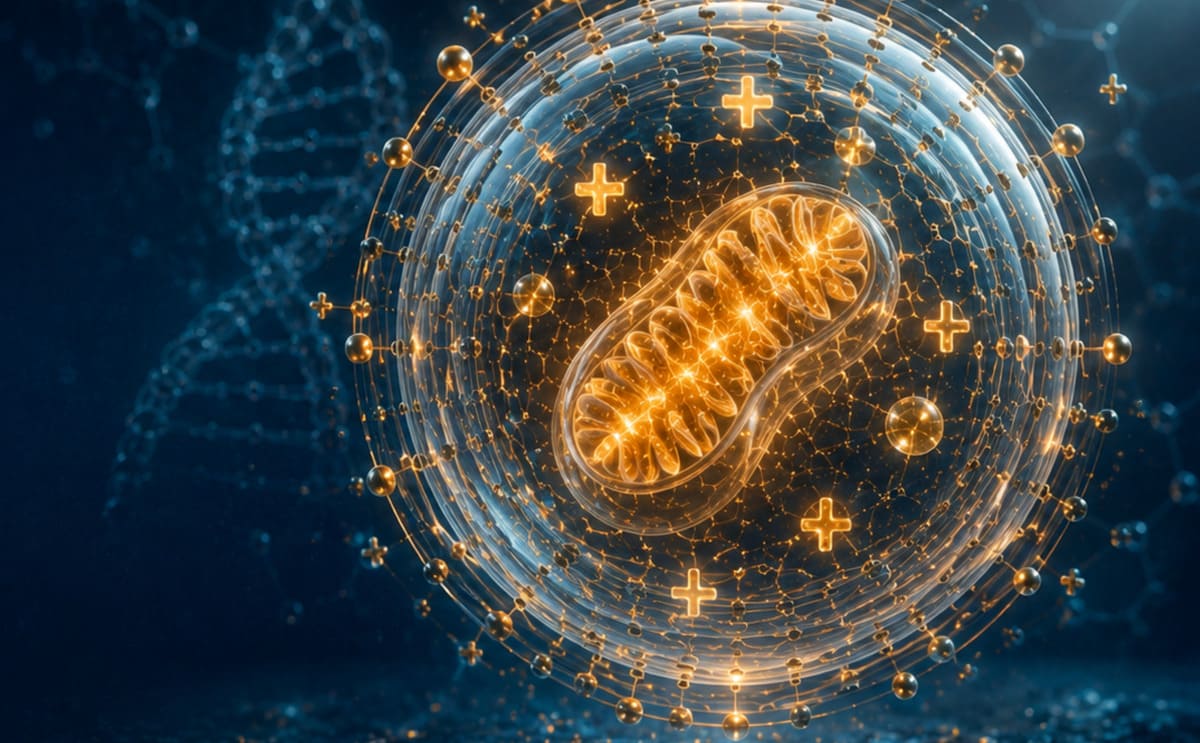
NMN delivered through PQNS cationic-phospholipid nanotechnology, part of the QuanticSphere™ delivery platform, engineered so more of every dose converts to circulating NAD⁺.
6.8× the NAD+ exposure of raw NMN
Measured, not modeled.
Cmax 575 vs 196 ng/mL
at 24 h
575 vs 196 ng/mL
n=8 human study
+63.5% vs conventional NMN
What restoring NAD+ supports
Conventional NMN is wasted before it's absorbed
Water-soluble, negatively charged and fragile — degraded in the gut and poorly transported across the intestinal wall.
Inconsistent uptake leads to a weak, unpredictable effect — even at a high labeled dose.
NMN degrades in heat, humidity and acid — cutting shelf life and potency.

How it works
NMN is negatively charged; PQNS cationic vesicles bind it electrostatically, shield it through the gut, and carry it into circulation.
Why formulators are switching
Built for formulators
Common questions about Q-Vitalon
Straight answers for formulators, distributors and brand buyers.
Q-Vitalon is NMN delivered through PQNS cationic-phospholipid nanotechnology, part of the QuanticSphere™ delivery platform, engineered so more of every dose converts to circulating NAD⁺.
Conventional NMN is water-soluble, negatively charged and fragile — it degrades in the gut and is poorly transported across the intestinal wall, giving a weak, unpredictable effect even at a high labeled dose. Q-Vitalon's PQNS cationic vesicles bind NMN electrostatically, shield it through the gut, and carry it into circulation, for measured (not modeled) results: 6.8× the NAD+ exposure of raw NMN.
PQNS (Phytosome Quantum Nano Sphere) is a cationic phospholipid delivery system (+139 mV zeta potential, 198.6 nm vesicle size by DLS). Because NMN is negatively charged, PQNS's cationic vesicles bind it electrostatically, shield it through the gut, and carry it into circulation. This delivery system has a patent pending (No. 202521095813).
In a single 500 mg dose, human pharmacokinetic study (n=8), Q-Vitalon (PQNS) delivered 6.8× the NAD+ exposure (AUC) of raw NMN, measured not modeled. Peak plasma NAD+ (Cmax) reached 575 ng/mL vs 196 ng/mL for conventional NMN (2.9× higher), with a plasma half-life of 8.3 hours (+63.5% vs conventional NMN) — still measurable at 24 hours. There were 0 adverse events in the study.
Request samples, MOQ and the full clinical dossier at info@integriacare.com.
Request samples, MOQ & the full clinical dossier
Talk to our team about volumes, blend specifications and technical documentation for your finished product.